
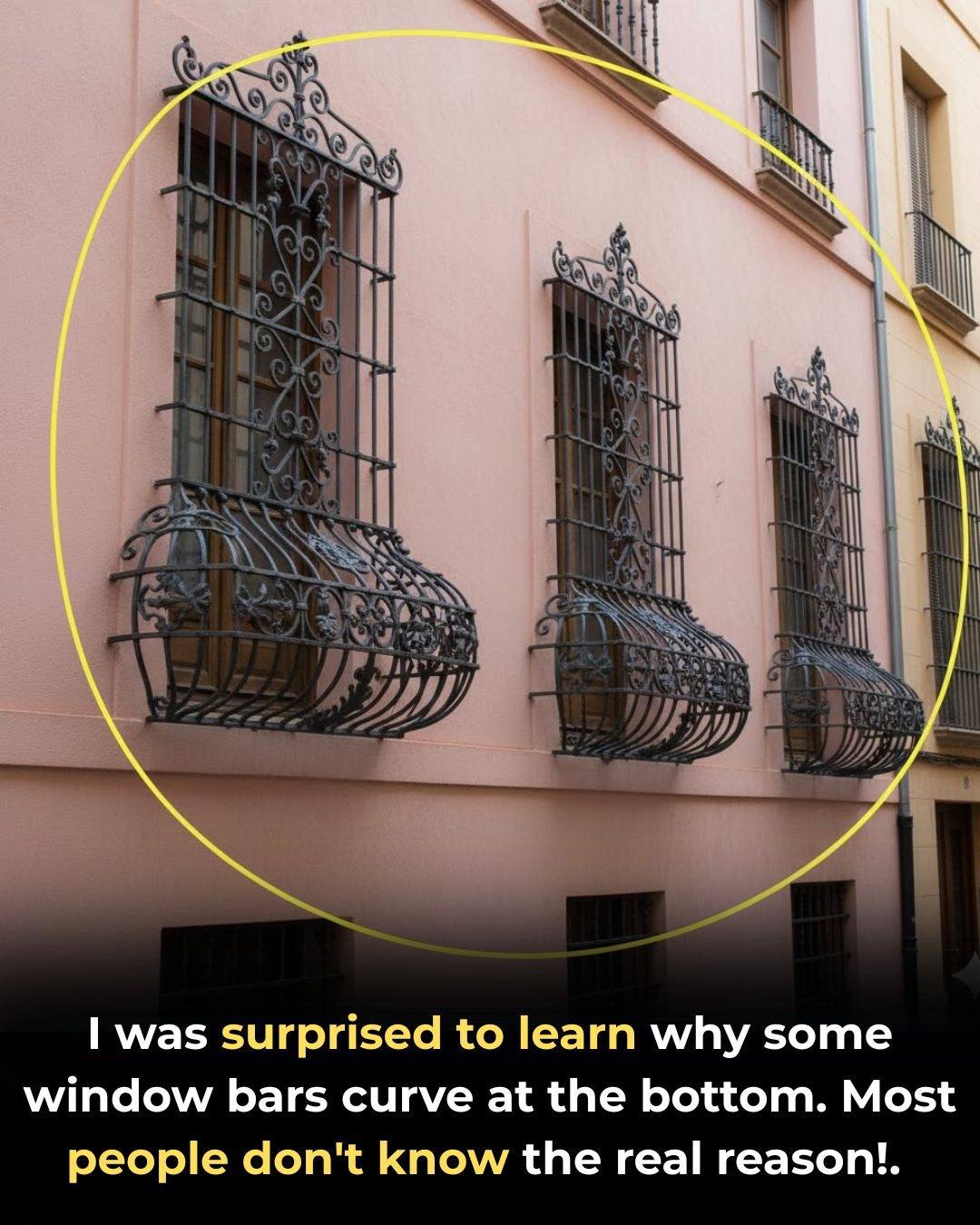
Window bars are usually associated with security, but in many homes around the world you’ll notice something interesting: instead of being flat, some bars bulge outward or curve at the bottom like a small cage or balcony shape.
This design isn’t random. It’s actually a mix of practical engineering, lifestyle needs, architecture, and even culture.
Let’s break it down clearly.
1. A Built-In Space for Plants and Flowers
One of the most common and beautiful reasons is simple: people wanted more space for plants.
The curved bars create a small external “shelf” where residents can place:
- Flower pots
- Herbs
- Decorative plants
- Small garden boxes
In many cities, especially where apartments are small and balconies are rare, this becomes a way to bring nature into daily life.
For many families, these window plants are not just decoration—they are part of home identity and tradition.
2. Creating Extra Space Without Expanding the Building
In dense urban areas, space is limited. Not every home can have a balcony or garden.
Curved window bars solve this problem by:
- Extending usable space outward
- Adding depth without construction changes
- Avoiding expensive structural renovations
Essentially, it is a low-cost architectural trick that adds functionality without changing the building footprint.
This is especially common in older European neighborhoods, Mediterranean homes, and parts of North Africa and the Middle East.
3. Still Designed for Security First
Despite their decorative look, these bars still serve their main purpose: security.
The curved shape does NOT weaken protection when properly built. Instead:
- Strong metal rods are still used
- Anchoring into the wall remains solid
- Spacing is designed to prevent entry
So even with the outward curve, they still function as a protective barrier against intrusion or accidental falls—especially on lower floors.
In fact, the curved design can sometimes make it harder for someone to climb directly up the wall.
4. Better Comfort and Airflow Perception
While not the primary reason, curved bars can slightly improve the living experience:
- They reduce the “caged-in” feeling
- Allow more light perception through the window
- Create a sense of openness from inside
Psychologically, straight bars can feel rigid and restrictive, while curved designs feel softer and more “livable.”
This is part of how architecture influences mood.
5. Cultural and Historical Architecture Style
In many regions, curved window bars are not just practical—they are traditional design elements.
Historically, they were used to:
- Decorate plain building facades
- Show craftsmanship in metalwork
- Reflect local architectural identity
For example, in older Mediterranean towns, ironwork was often handcrafted, and curves were easier to shape artistically than strict modern straight lines.
Over time, this became a recognizable style that still appears in modern buildings today.
6. Protection Against Rain Splash and Dirt
Another small but useful benefit is environmental protection.
The outward curve can help:
- Reduce direct rain hitting the window glass
- Keep dirt and debris slightly farther from the wall
- Improve water runoff behavior around the window area
While this is not the main purpose, it adds practical value in rainy or windy climates.
7. Psychological Feeling of Space
Interestingly, architecture also affects how we feel mentally.
Curved bars can create:
- A feeling of extra space outside the window
- A softer visual boundary between inside and outside
- Less claustrophobic perception compared to flat bars
This small design change can make rooms feel more open and pleasant.
IMPORTANT REALITY CHECK
It’s important to understand:
Curved bars are NOT for decoration alon They are NOT weaker than straight bars when properly built
Their design varies depending on region and purpose
Safety and function are always the primary goal
In most cases, you are seeing a combination of security engineering + lifestyle adaptation + cultural design.
FINAL THOUGHTS
Curved window bars are a great example of how everyday architecture solves multiple problems at once.
They provide:
Space for plants and greenery
Extra usable outdoor-like area
Strong security protection
Cultural and aesthetic identity A more open visual feeling
What looks like a simple shape is actually a smart blend of practicality and design thinking.
So next time you see them, you’re not just looking at metal bars—you’re looking at a small piece of architectural creativity that makes homes more livable, beautiful, and functional.
