
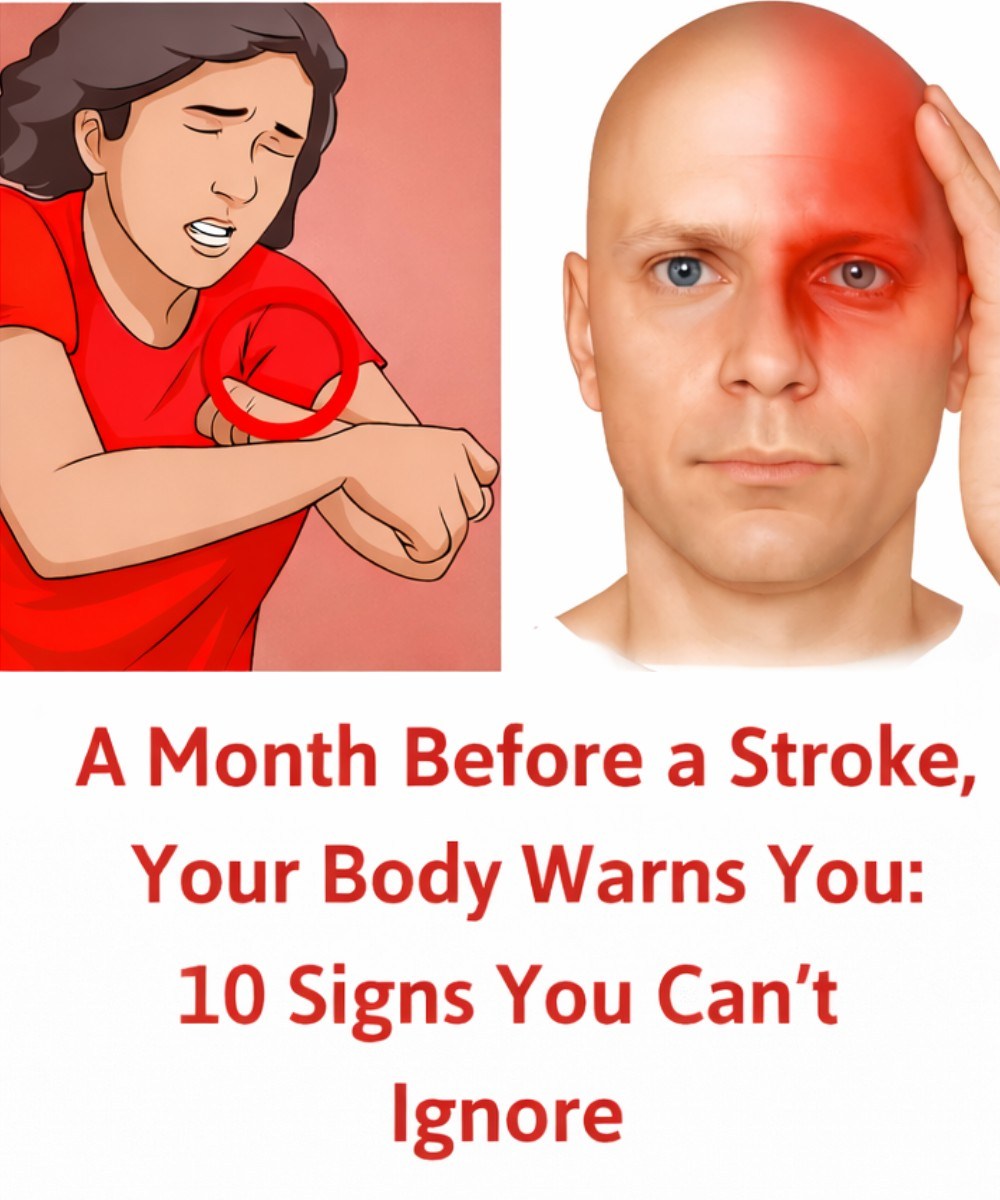
Headlines often claim the body gives clear warnings “a month before a stroke.” The truth is more nuanced: some people experience early warning signs or brief episodes, while others have no obvious symptoms at all.
What matters most is recognizing possible warning signs early and acting quickly.
A stroke occurs when blood flow to part of the brain is interrupted. This is a medical emergency, and early detection can save lives.
1. Sudden weakness on one side of the body
One of the most classic warning signs:
- Weakness or numbness in the face, arm, or leg
- Usually affects one side
This may come and go in early stages.
2. Difficulty speaking or slurred speech
You might notice:
- Trouble forming words
- Slurred or unclear speech
- Difficulty understanding others
Even brief episodes should be taken seriously.
3. Vision problems
Changes in vision can include:
- Blurred vision
- Double vision
- Temporary loss of sight in one eye
These symptoms may appear suddenly and disappear.
4. Sudden confusion
You may feel:
- Disoriented
- Unable to focus
- Mentally “foggy”
This can be subtle but important.
5. Loss of balance or coordination
Signs include:
- Dizziness
- Trouble walking
- Loss of coordination
This can increase fall risk.
6. Severe headache (especially unusual)
A sudden, intense headache—often described as “the worst ever”—can be a warning sign, especially in certain types of stroke.
7. Unusual fatigue or weakness
Some people experience:
- Sudden exhaustion
- Lack of energy without clear reason
This is less specific but still worth noting when combined with other symptoms.
8. Irregular heartbeat or chest discomfort
Heart rhythm problems can increase stroke risk, especially in conditions like Atrial Fibrillation.
Signs may include:
- Palpitations
- Fluttering sensation in the chest
9. Transient ischemic attack (TIA)
A Transient Ischemic Attack is often called a “mini-stroke.”
Symptoms are similar to a stroke but temporary:
- Weakness
- Speech problems
- Vision issues
This is a major warning sign and requires immediate medical attention.
10. Facial drooping
One side of the face may:
- Droop or feel numb
- Appear uneven when smiling
This is part of the well-known FAST warning system.
Important: Stroke symptoms require immediate action
If you notice any of these signs—even briefly—seek emergency care immediately.
Doctors often use the FAST rule:
- Face drooping
- Arm weakness
- Speech difficulty
- Time to act
What actually matters more than timing
There is no guaranteed “one-month warning period.” Instead:
- Symptoms may appear suddenly
- Or occur as short warning episodes (TIAs)
- Or not appear at all before a stroke
Stroke risk is better understood through long-term factors like:
- High blood pressure
- Smoking
- Diabetes
- High cholesterol
These are studied in Neurology.
How to reduce stroke risk
Simple steps can lower risk:
Control blood pressure Stay physically active Eat a balanced die Avoid smoking Manage stress Monitor heart health
Final thoughts
The body doesn’t always give clear, long-term warnings before a stroke—but it can send important signals that should never be ignored.
The key message is: Don’t wait for symptoms to repeat Take even brief warning signs seriousl Act quickly—time saves brain function
Because when it comes to stroke, early action can make all the difference.
