
Navigating workplace dress codes and professional style guidelines can sometimes feel like solving a complex puzzle. Whether scrolling through social media style debates or preparing for a new corporate career, understanding what constitutes appropriate business attire is essential for making a strong first impression. Dress codes vary widely from formal corporate boardrooms to creative startup spaces, but certain timeless standards of elegance, modesty, and professionalism remain universal. This comprehensive guide explores the evolution of office fashion, the psychology of professional appearance, and practical tips to curate a versatile, high-impact work wardrobe.
The Psychology of Professional Dress
Why do office style debates generate such intense discussion and commentary online? Human beings make rapid subconscious judgments based on visual presentation. In professional settings, attire acts as a non-verbal communicator of competence, authority, reliability, and respect for company culture.
When individuals wear clothes that fit well, align with industry standards, and project neatness, they often feel more confident and perform better. Conversely, dressing inappropriately for a workplace environment can create miscommunications or project a lack of seriousness. Understanding these nuances helps professionals strike the right balance between personal self-expression and corporate expectations.
Decoding Corporate Dress Codes: From Formal to Casual
Modern office environments generally fall into a few distinct categories, each requiring a specific approach to wardrobe selection.
- Traditional Business Formal
Reserved for law firms, investment banking, and high-level corporate executive environments, business formal requires tailored suits, structured blazers, conservative skirts or trousers, and closed-toe footwear. The emphasis is on uniformity, neutral colors, and polished execution. - Business Casual
The most common modern office standard, business casual blends tailored pieces with comfortable everyday wear. Slacks, chinos, button-down shirts, professional blouses, blazers, and knit sweaters are staples. Jeans or sneakers are typically restricted unless the company culture leans heavily toward casual Fridays or tech-startup norms. - Smart Casual and Creative Workspaces
Creative agencies, design studios, and tech companies often embrace smart casual attire, allowing for greater flexibility, personal flair, and modern styling while still maintaining an overall neat and polished appearance.
Step-by-Step Breakdown: Evaluating Office Outfits
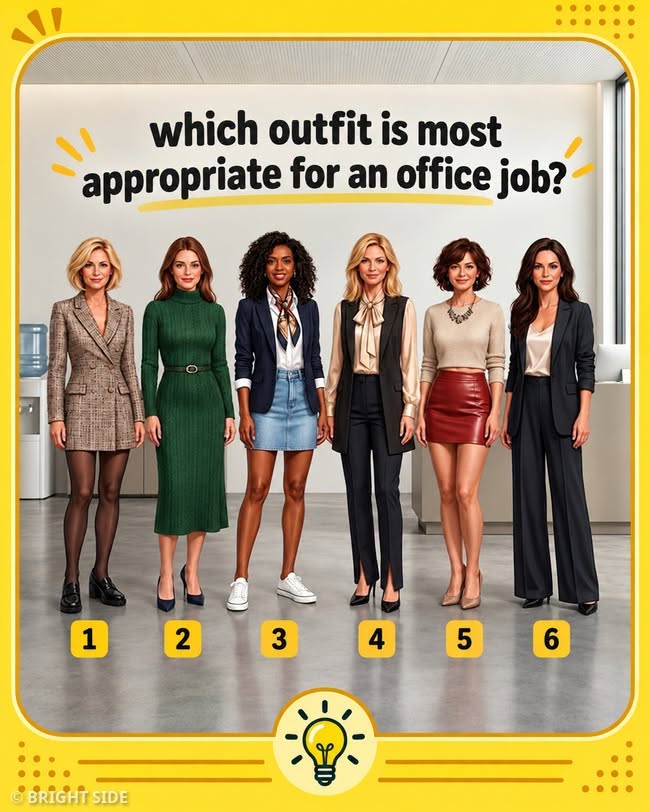
When analyzing professional looks—such as the six diverse styles featured in our image—we must evaluate each outfit against standard workplace expectations:
Outfit 1 (Plaid Blazer Dress): While tailored, a very short blazer dress paired with sheer dark stockings leans more toward evening or social wear than conservative office standards.
Outfit 2 (Green Turtleneck Midi Dress): This look offers a fantastic combination of elegance, modesty, and professional polish. The midi length and structured knit make it a stellar business-casual choice.
Outfit 3 (Blazer with Denim Skirt and Sneakers): While trendy and great for weekend outings, the denim miniskirt and casual sneakers fall short of standard corporate dress requirements.
Outfit 4 (Sleeveless Vest with Trousers): A sophisticated, contemporary look combining tailored trousers and a layered vest top, making it exceptionally sharp for modern corporate environments.
Outfit 5 (Sweater with Leather Miniskirt): Although stylish, a tight leather miniskirt is generally considered too casual or revealing for a traditional office setting.
Outfit 6 (Classic Navy Pantsuit): The ultimate epitome of professional elegance. A well-tailored blazer paired with matching wide-leg trousers creates an authoritative, polished look suitable for any formal office.
Practical Tips for Building a Capsule Work Wardrobe
Maintaining a professional wardrobe without breaking the bank or wasting time each morning requires strategic planning and investment in versatile staples.
Focus on Neutrals: Build your core wardrobe around versatile neutral colors like navy, charcoal gray, black, beige, and white. These shades mix and match effortlessly.
Prioritize Tailoring: Even an inexpensive garment looks high-end when tailored to fit your body perfectly. Invest in alterations for trousers and blazers.
Choose Breathable Fabrics: Opt for high-quality natural fabrics like cotton, wool, silk, and linen blends that keep you comfortable throughout a long workday.
Invest in Quality Footwear: Comfort is vital when you are walking around an office or commuting. Choose supportive closed-toe flats, loafers, or moderate heels.
Interesting Facts About Office Fashion Through History
The evolution of professional clothing reflects broader shifts in society, gender equality, and corporate culture.
The Rise of the Pantsuit: Popularized in the mid-20th century by pioneering designers and worn increasingly by women entering the corporate workforce in the 1970s and 80s, the pantsuit revolutionized professional fashion as a symbol of equality and power.
Casual Fridays Origins: The concept of dressing down on Fridays began in Hawaii during the 1960s as “Aloha Friday” before spreading to mainland tech and corporate offices in the 1990s to boost employee morale.
The Psychology of Color: Navy blue and charcoal are historically the most popular colors for business suits because they convey trustworthiness, stability, and professionalism across global cultures.
Conclusion
Dressing for an office job is an art that balances personal style with professional standards. By understanding dress code categories, prioritizing tailored fits, and selecting versatile staple pieces, you can project confidence and authority in any workplace. Keep refining your wardrobe choices, stay mindful of company culture, and step into every workday looking and feeling your absolute best!
Frequently Asked Questions
What is the safest dress code option if I am unsure of a company’s culture?
When in doubt, business casual leaning toward formal is always safest. A tailored blazer, neutral trousers, and a clean blouse or button-down ensure you look professional without being overdressed.
Are jeans ever acceptable in an office environment?
In modern tech startups or creative agencies, dark-wash, well-fitted jeans paired with a blazer are often acceptable. However, they should be avoided in traditional corporate, legal, or financial settings unless explicitly permitted.
How can I make a simple outfit look more professional?
Adding a structured blazer, wearing clean closed-toe shoes, styling your hair neatly, and keeping accessories minimal and elegant instantly elevates even the simplest outfit into professional territory.
