
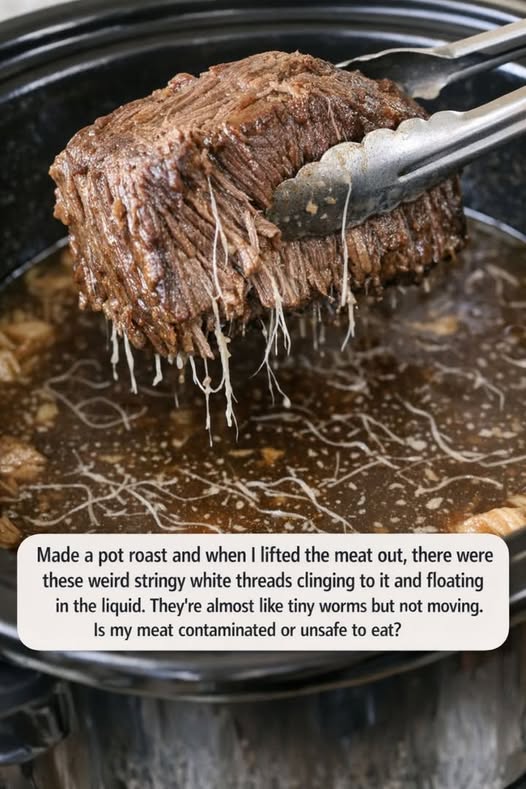
Have you ever cooked a delicious pot roast, lifted the meat out of the slow cooker, and suddenly noticed strange white stringy threads clinging to the meat or floating in the broth? Many home cooks panic when they see this. At first glance, it can look alarming—almost like tiny worms or mysterious fibers in the cooking liquid.
If this has ever happened to you, you are definitely not alone. Thousands of people online ask the same question every year: “Is my meat contaminated or unsafe to eat?”
The good news is that in most cases, what you’re seeing is completely normal and harmless. In fact, professional chefs and experienced home cooks encounter this phenomenon all the time when cooking tougher cuts of meat slowly.
Let’s break down what’s really happening inside your pot roast.
What Are Those White Stringy Threads?
Those white thread-like strands are usually connective tissue fibers, mainly collagen, that naturally exist inside meat.
Cuts used for pot roast—such as chuck roast, brisket, or shoulder—come from parts of the animal that work hard. Because of that, these muscles contain a lot of connective tissue. When cooked slowly over time, the heat and moisture break down that connective tissue.
During this process, collagen transforms into gelatin, which is what makes slow-cooked meat so tender and flavorful.
However, before it fully dissolves into the broth, some of the collagen fibers can appear as thin white strings or threads attached to the meat or floating in the liquid.
So while it might look unusual, it is actually a sign that the slow cooking process is doing its job.
Why It Happens More in Slow Cooking
Pot roasts are typically cooked using methods like:
- Slow cookers
- Dutch ovens
- Pressure cookers
- Long oven braising
These cooking techniques use low heat over a long time, which allows the connective tissue to gradually soften.
When collagen breaks down slowly, it can sometimes stretch into visible strands before melting completely. This is especially common if:
- The meat had a lot of connective tissue
- The roast cooked for several hours
- The meat was very tender when removed
Ironically, the more tender the roast becomes, the more likely you might see these strands during the cooking process.
Are They Parasites or Worms?
One of the biggest fears people have when they see these threads is that they might be parasites.
In properly handled and cooked beef, this is extremely unlikely.
Parasites that can infect meat are typically destroyed by:
- Proper refrigeration
- Standard food safety handling
- Cooking at safe internal temperatures
Also, parasites do not usually appear as uniform white fibers woven through the meat. What you’re seeing in a pot roast is simply natural muscle structure breaking down during cooking.
If the meat was purchased from a reputable grocery store and cooked thoroughly, there is very little reason to worry.
Signs Your Pot Roast Is Safe to Eat
To determine whether your pot roast is safe, consider the following factors:
1. Smell
Freshly cooked meat should have a rich, savory aroma. If the roast smells sour or unpleasant, that could indicate spoilage.
2. Texture
Properly cooked pot roast should be tender and easy to pull apart with a fork.
3. Cooking Temperature
Beef is considered safe when cooked to an internal temperature of at least 145°F (63°C), though pot roasts usually cook far beyond that for tenderness.
4. Storage
If the meat was kept refrigerated before cooking and cooked within the recommended time frame, it is generally safe.
If all these conditions are met, the white threads are almost certainly harmless connective tissue.
Why Chefs Actually Like This Sign
Professional chefs often consider visible connective tissue breakdown to be a good indicator that a tough cut of meat is transforming into something delicious.
That slow conversion of collagen into gelatin is what creates:
- Rich, silky broth
- Moist meat texture
- Deep flavor
Without that connective tissue, pot roast would be much less satisfying.
In other words, those strange-looking threads are part of what helps create the classic melt-in-your-mouth pot roast experience.
How to Make the Perfect Pot Roast
If you want the best results every time, here are a few simple cooking tips:
Choose the right cut:
Chuck roast is one of the best options because it has plenty of connective tissue for tenderness.
Cook low and slow:
Temperature between 275–325°F (135–160°C) works well for braising.
Add moisture:
Use broth, wine, or water so the meat stays hydrated during the long cook.
Give it time:
Many pot roasts need 3–5 hours to become fully tender.
The Bottom Line
Those mysterious white stringy threads in your pot roast might look strange, but in most cases they are simply natural connective tissue fibers breaking down during slow cooking.
Rather than being a sign of contamination, they are actually part of the process that transforms tough cuts of meat into the tender, flavorful dish everyone loves.
So next time you lift your roast from the pot and notice those threads, there’s no need to panic. It may just mean your meal is on its way to being perfectly cooked.
And as many experienced cooks say: sometimes the things that look unusual in the kitchen are actually the secret behind the best flavors.
