
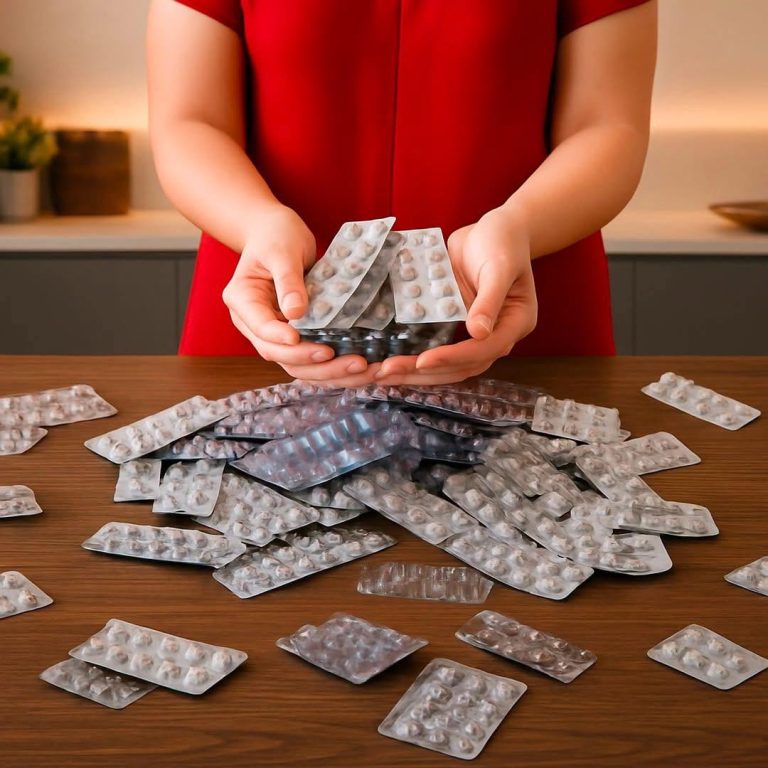
Every time we finish a course of medication, empty blister packs usually go straight to the trash. However, these small containers combine two very versatile materials: a rigid, cell-molded plastic and an aluminum foil backing. This combination makes them an economical and accessible resource for solving everyday organizational problems, crafting, and household projects.
Below we share ten creative and functional ways to give them a second life, reduce plastic waste and discover the hidden value of an object that most consider useless.
Why it’s a good idea to reuse medicine blister packs
Blister packs are made of PVC, PET, or aluminum, materials that take decades to decompose. Although some recycling centers accept them, many places lack specific programs for processing them. Reusing them at home extends their lifespan, prevents them from ending up in landfills, and allows you to take advantage of their compartmentalized shape, which is ideal for storing small items.
Ten ideas for reusing empty blister packs
1. Bead and bead organizer
If you enjoy jewelry making, blister packs are perfect for sorting beads, seed beads, or decorative stones by color and size. Each cell acts as a small, individual compartment, preventing pieces from getting mixed up while you work.
2. Holder for screws and small parts
When you disassemble furniture or repair an appliance, losing screws is very common. Place each type of part in a different compartment of the blister pack and label them with a marker. This way, you’ll know exactly where each item goes when you reassemble.
3. Mold for painting and watercolors
Blister packs can replace paint palettes. The cells are ideal for holding small amounts of tempera, acrylic, or watercolor paint, especially when children are learning to mix colors. When finished, you simply discard the blister pack without having to wash anything.
4. Decorative ice cube tray
If the plastic is clean and free of chemical residue, you can use the blister pack as a mold to make mini ice cubes, chocolate drops, or small candies. It’s handy for making decorations for parties or drinks.
5. Seed storage for the garden
Those with a home garden can use the cells to store seeds classified by type. Seal each compartment with tape or the aluminum foil itself and write the name of each plant. It’s a compact and organized way to maintain your seed bank.
6. Germination tray
The deeper cells can function as mini pots for germinating seeds. Make a small hole in the bottom of each cavity for drainage, add soil, and place one seed per compartment. When the seedlings have grown, transplant them to a larger container.
7. Sewing thread and needle organizer
Sewing kits always tend to get cluttered. Use blister packs to store buttons by size, pins, needles, snaps, or small spools of thread. The clear plastic surface makes it easy to see what’s inside.
8. Materials for children’s crafts
Blister packs are ideal for school projects. They can be painted, cut out, and transformed into insect bodies, fish scales, flower petals, or robot parts. They stimulate creativity and teach children the value of recycling everyday materials.
9. Homemade vitamin or supplement dispenser
If you take multiple supplements throughout the week, you can reuse a clean blister pack to organize your daily doses. Label each compartment with the days of the week and cover it with a sticker or tape to keep the contents protected.
10. Reinforcement for wrappings and packaging
The aluminum foil on the back can be cut out and reused as reflective material in school projects, Christmas decorations, or even as glitter bookmarks. The plastic, meanwhile, can serve as a rigid base to reinforce envelopes containing fragile items.
Tips before reusing blister packs
- Clean each piece thoroughly: even if they appear empty, there may be traces of dust or medication residue.
- Avoid contact with food: unless you are completely sure that the material is suitable, do not use them to store food directly.
- Keep them out of reach of small children: the cut-out pieces may pose a choking hazard.
- Separate the plastic from the aluminum when you no longer need them, to facilitate later recycling.
A small action with impact
Reusing everyday objects like empty blister packs is a simple way to contribute to environmental care and, at the same time, save money on organizers and craft supplies. With a little creativity, what seemed like simple waste becomes an ally for keeping your home tidy and for developing fun family projects.
