
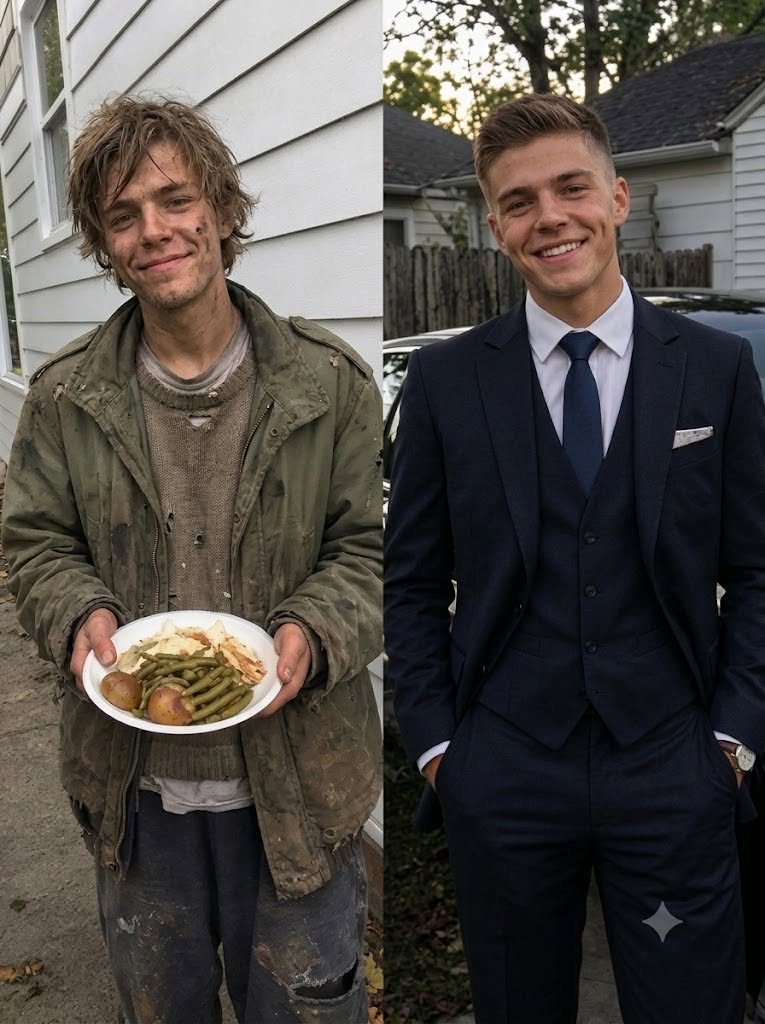
Wayne shook his head, then hesitated.
“I saw his truck near the fence three months ago. He was back in town.”
“Why didn’t you tell me?”
“Because you hadn’t spoken to Mom in years. You don’t get to come back now and demand explanations about how she spent her money.”
For illustrative purposes only
His words stung because part of me knew he was right.
I had been absent. I had ignored her letters and avoided her calls. I had convinced myself that leaving meant I no longer owed the past anything.
But my mother had made me promise.
And I intended to keep it.
The next morning, I began sorting through her belongings. I found old grocery receipts, unopened envelopes, and a small notebook filled with dates and amounts.
Some entries recorded the cost of food. Others mentioned repairs, transportation, and payments I couldn’t identify.
The same name appeared repeatedly.
Gabriel.
I felt that familiar anger rising inside me. Had she really spent years sacrificing her own comfort for him? Had she emptied whatever savings remained after my father’s death?
Then I found an envelope tucked beneath a stack of old photographs.
My name was written across the front in my mother’s handwriting.
Inside was a single sentence.
If you are reading this, Abigail, it means I no longer have the chance to explain everything to you myself.
My hands began to tremble.
Beneath the letter was a faded photograph of my mother standing beside a young man outside the municipal dump.
Gabriel.
But he wasn’t looking at the camera.
He was looking at her with an expression I had never seen on his face when I was a child.
Trust.
I turned the photograph over.
On the back, my mother had written a date and six words.
The day we made our promise.
I read the sentence again.
Then I noticed something else in the photograph: a small, dented metal box resting near Gabriel’s feet.
The box looked old enough to have been buried for years.
And suddenly, I remembered the second brass key in my pocket.
I called Wayne into the kitchen and showed him the photograph.
He stared at it for a long moment.
“Where did you find that?”
“In Mom’s room. Do you know anything about the box?”
He shook his head, but his expression had changed.
For the first time since I arrived, my brother looked genuinely afraid.
“Abigail,” he said quietly, “there are things about Gabriel you never knew.”
“Then tell me.”
He glanced toward the window.
“I can’t. Not without knowing what’s inside that box.”
We spent the next hour searching the house for anything that might explain the photograph. We found more receipts, a few old letters, and a small envelope containing a rough drawing of the fence behind the municipal dump.
A red cross marked a spot beneath an old oak tree.
The words beneath it were unmistakable.
For the day Abigail comes home.
I stared at the handwriting.
My mother had known I might return someday.
Even after eleven years of silence, some part of her had kept a place for me.
That afternoon, Wayne and I walked down the slope behind the house. The municipal dump had changed over the years, but the old oak tree remained beside the fence.
Its roots twisted through the damp earth.
We searched until Wayne’s shoe struck something hard.
A corner of rusted metal protruded from the soil.
Together, we dug it out.
It was a small, dented metal box, its surface scratched and discolored by years underground. A narrow keyhole sat beneath the corroded latch.
I took the brass key from my pocket.
It fit.
For several seconds, neither of us moved.
