
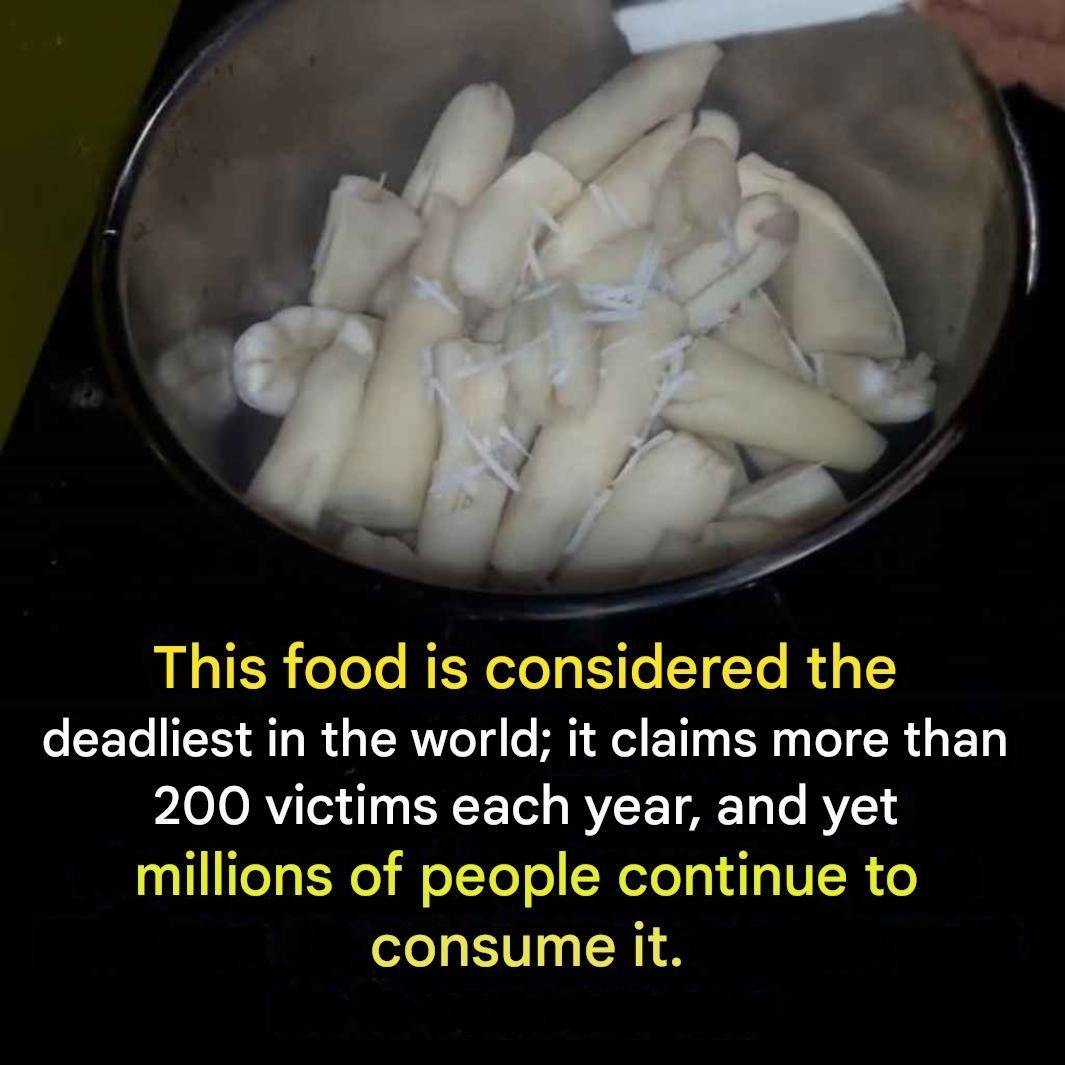
It might be sitting in your kitchen right now.
It feeds hundreds of millions of people every single day.
And yet, if prepared incorrectly, it can become extremely dangerous.
So what is this so-called “world’s deadliest food”?
The answer is cassava — also known as yuca or manioc.
Surprised? You’re not alone.
Let’s break down why this common staple food carries such a serious reputation — and why it’s still widely consumed across the globe.
What Is Cassava?
Cassava is a starchy root vegetable grown in tropical regions around the world.
It’s a major food source in parts of:
- Africa
- South America
- Southeast Asia
For many communities, cassava isn’t just food — it’s survival. It’s affordable, calorie-dense, drought-resistant, and easy to grow in poor soil conditions.
It’s used to make:
- Tapioca
- Cassava flour
- Fufu
- Garri
- Chips and snacks
- Bread alternatives
But here’s where things get serious…
Why Can Cassava Be Dangerous?
Raw cassava naturally contains compounds called cyanogenic glycosides.
When the root is eaten without proper preparation, these compounds can release cyanide in the body.
Yes — cyanide.
In large amounts, cyanide can interfere with the body’s ability to use oxygen, potentially leading to poisoning.
Symptoms of improper cassava consumption can include:
- Dizziness
- Vomiting
- Stomach pain
- Weakness
- Difficulty breathing
In severe cases, it can be fatal.
According to global health estimates, poorly processed cassava is linked to over 200 deaths per year, primarily in regions where food scarcity forces people to consume it without proper preparation.
Why Do Millions Still Eat It?
Here’s the important part:
Cassava is completely safe when prepared correctly.
Communities that rely on cassava have traditional methods to remove its toxic compounds, including:
- Peeling
- Soaking
- Fermenting
- Drying
- Thorough cooking
These processes significantly reduce the cyanide content to safe levels.
For millions of families, cassava is:
- A primary source of carbohydrates
- A cultural staple
- A daily necessity
In fact, it feeds over half a billion people worldwide.
The danger arises not from the food itself — but from improper preparation, especially during times of famine or food shortages.
The Bigger Picture
Labeling cassava as the “world’s deadliest food” can be misleading.
When handled responsibly, it’s no more dangerous than many other foods that require proper cooking.
For example:
- Undercooked beans can contain harmful toxins.
- Certain mushrooms can be deadly if misidentified.
- Raw seafood carries risks if not handled properly.
Many foods demand respect and correct preparation.
Cassava is one of them.
Why Awareness Matters
In some regions, particularly during droughts or crises, people may skip proper preparation steps due to lack of resources or urgency.
That’s when risk increases.
Health organizations continue to educate communities about safe cassava processing techniques to prevent poisoning and long-term health issues linked to chronic exposure.
Education saves lives.
Is Cassava Available in Other Countries?
Yes.
Cassava products like tapioca pearls and cassava flour are sold worldwide.
However, commercially sold cassava products in regulated markets are processed safely before reaching consumers.
If you buy cassava root in a grocery store, instructions typically recommend peeling and cooking it thoroughly before eating.
Never consume raw cassava.
Risk vs. Reality
It’s important to keep perspective.
Cassava is not “deadly” in the way poisonous plants or toxic chemicals are.
It becomes dangerous only when preparation guidelines aren’t followed.
For most people purchasing it through proper channels, the risk is extremely low.
In fact, cassava provides:
- Energy
- Dietary fiber
- Essential nutrients
- Gluten-free alternatives for baking
It plays a vital role in global food security.
The Takeaway
The story of cassava is a reminder of something important:
Many foods around the world require knowledge, tradition, and proper preparation.
What makes something dangerous isn’t always the ingredient itself — it’s how it’s handled.
So while headlines may call it the “world’s deadliest food,” the full story is more nuanced.
Cassava feeds millions safely every day — when prepared the right way.
Have you ever tried cassava, yuca fries, or tapioca-based dishes?
It’s fascinating how something so essential to one part of the world can be so misunderstood elsewhere.
Food isn’t just nutrition — it’s culture, history, and survival.
